Falls Township's Fast-Tracked Data Center Is Where Pennsylvania's AI Bet Gets Real
Gov. Josh Shapiro is using faster permitting to help land Amazon's Falls Township data center. The harder question is whether Pennsylvania can capture the jobs and tax base without leaving residents with the power, water, air, and transparency risks.
By Ryan
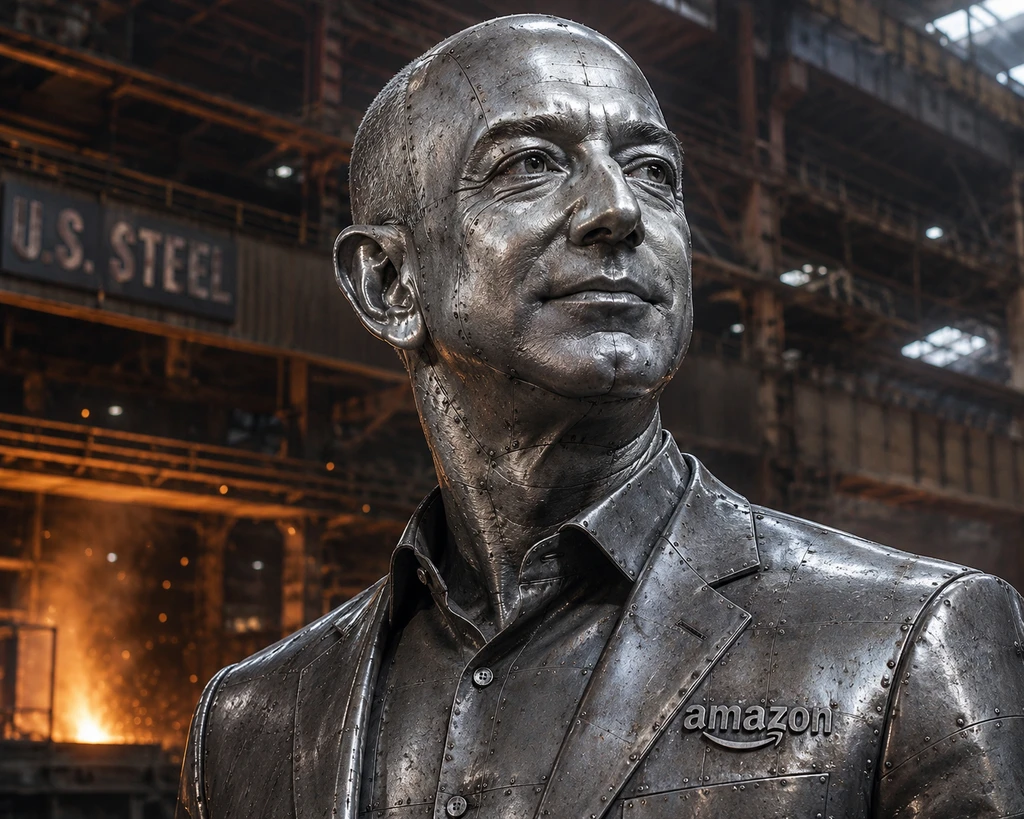
Gov. Josh Shapiro wants Pennsylvania to be a winner in the AI buildout. Falls Township is one of the first places where that strategy is turning from press release into steel, permits, power contracts, and public pushback.
The project is tied to Amazon Web Services' planned $20 billion Pennsylvania investment, which the governor called the largest private-sector investment in commonwealth history. The first two identified sites are Salem Township in Luzerne County and Falls Township in Bucks County. The state says the buildout will create at least 1,250 high-paying tech jobs, plus thousands of construction and supplier jobs.
In Falls, the campus would sit at the Keystone Trade Center, the former U.S. Steel site being redeveloped by NorthPoint Development. Officials have pointed to remediation, new tax base, fewer trucks than a warehouse-heavy plan, and more technical permanent jobs. Those claims are part of the public sales pitch, but they do not answer the core question: what will this project cost the people who live with the power, water, air, noise, and transparency consequences?
What fast-tracked means here
The Shapiro administration has put the Falls Township data center into the PA Permit Fast Track Program. The state says the program coordinates agencies, posts permitting information, and tries to move major projects through review more predictably.
The administration has been explicit about speed. In an August 2025 release from the Keystone Trade Center, the governor's office said the review of the project's air-quality permit was completed in under four months instead of the standard six, and that a key erosion and sediment-control permit was tracking about two and a half months ahead of the standard timeline.
That is the part critics hear as "rubber stamp." The state describes it differently: quicker review, not waived review.
Both things can be true at once. A faster permit clock can still follow the law. It can also make residents feel like the important decision already happened before they understood what was being built.
The official sales pitch
Falls Township says NorthPoint has been redeveloping the 1,800-acre former U.S. Steel property since 2020, with plans for industrial buildings, distribution centers, and data centers totaling up to 10 million square feet, with potential for 15 million. The township has said NorthPoint will invest $1.5 billion in the site and spend an estimated $40 million to $45 million on remediation.
Supporters describe the project as construction work, tax revenue, electrical and mechanical jobs, security jobs, facilities jobs, and long-term investment. They also argue it could mean less daily truck traffic than a distribution center. Those are claims to test, not reasons to stop asking questions. The public still deserves to know how many permanent jobs are real, how much tax revenue stays local, and what environmental or utility costs come with the deal.
At the state level, Shapiro is treating data centers as a prize to win. His pitch is that Pennsylvania can compete while requiring standards around power, water, environmental protection, local hiring, and community engagement. But permitting speed does not prove a chosen site is right, and voluntary standards do not mean much unless they are public, measurable, and enforceable.
The question is whether those standards are enforceable promises or just a nicer story around a project that was already coming.
Why people are pushing back
Recent opposition in Falls Township has focused on air, water, health, electricity demand, and transparency. Patch reported this week that residents attended a supervisors meeting, with one organizer saying she had started a petition after realizing the project was a data center rather than another warehouse. Residents asked for a community meeting and raised concerns about air, drinking water supplies, and health.
The transparency concern is not imaginary. Data center developers often shield power, design, and tenant details as proprietary. Falls Township meeting minutes from December 2025 show residents asking about non-disclosure agreements. Township officials said the NDA involved proprietary Amazon technology, not ownership, but that distinction does not fully solve the public-trust problem. If residents cannot see the details, they are being asked to trust the process.
The air issue is concrete. A Pennsylvania Bulletin notice in June 2025 described an Amazon Data Services air-quality plan approval for the Falls Township data center involving 72 diesel-fired emergency generator engines rated at 2.5 megawatts each, plus four house emergency generator engines. DEP's notice says the generators are for backup power during utility interruption and not for peak shaving or non-emergency demand response. That limitation matters, but backup generators still bring emissions, testing, maintenance, and emergency-operation questions.
There is also a nearby fossil-fuel context. Constellation lists its Falls Generating Station as a three-unit, 51-megawatt oil-fueled peaking facility in Falls Township, used for peak demand and load balancing. That does not mean the data center will be directly powered by that plant. It does mean the region's grid stress, backup generation, and peaking generation cannot be treated as abstract.
The power-bill problem
The biggest open question may be power.
PECO and Amazon Data Services already have a transmission security agreement for the Falls Township project. FERC approved it in November 2025. Utility Dive reported that the agreement outlines how Amazon will pay for grid upgrades needed to serve the data center, while FERC said the agreement did not address the generation capacity needed to serve the load.
That difference is important. Transmission upgrades are one bucket. Regional supply and capacity prices are another.
WHYY reported in May 2026 that PECO says its transmission security agreements are meant to make large-load customers pay their fair share of grid infrastructure costs. The agreements can protect against a scenario where a utility builds expensive upgrades and the customer never fully shows up. But WHYY also noted that those agreements do not protect residential customers from rising electricity supply costs across the PJM regional grid.
Pennsylvania regulators are trying to catch up. The PUC has released a nonbinding large-load model tariff framework that recommends charging very large customers for upgrades that would not have been needed "but for" that customer. It is a step in the right direction, but nonbinding guidance still has to become project-level protection.
For residents, the fair ask is simple: if the data center needs new wires, substations, capacity, backup systems, or grid support, the public should be able to see who pays, what risk remains, and what happens if the project uses less power than forecast or more power than promised.
The water question
Data centers vary widely in water use depending on cooling design. A dry or closed-loop system is different from evaporative cooling. A campus designed for heavy AI loads can also have different cooling needs than a more conventional cloud facility.
The public record around Falls has not yet made the water story feel settled. Township officials have pointed out that the former steel mill used large amounts of water and electricity, which is true historical context. But the relevant question is not only whether the site used to be industrial. It is what this new use will draw, discharge, heat, treat, and monitor now.
Because this site sits near the Delaware River corridor, the water questions should be specific: source, peak demand, cooling method, wastewater, stormwater, flood risk, emergency runoff, and public reporting. If the answer is "minimal water use," the developer and regulators should be able to say that plainly and document it.
Across the river, less of a voice
There is another group of neighbors in this fight: the New Jersey river towns across from Falls Township.
Burlington County lists Bordentown City, Bordentown Township, Burlington City, Burlington Township, Florence Township, and other municipalities as Delaware River communities. Florence Township's own master plan describes the town as having about three miles of Delaware River frontage, with older residential areas closer to the river. Burlington City, Burlington Township, Bordentown, Roebling, and Florence are not voting on Falls Township land development plans. Their residents do not elect Falls supervisors. They do not control Pennsylvania DEP's permit clock. But they still live in the same river corridor.
That matters because some impacts do not stop at a municipal or state line. Air emissions from diesel backup testing, emergency generator use, construction dust, river-adjacent stormwater risk, regional power demand, transmission buildout, and Delaware River water quality are all cross-border concerns. A resident in Florence or Burlington can be close enough to care, but politically outside the room where the project is being advanced.
The Delaware River Basin Commission exists because the river does not belong neatly to one town or one state. DRBC describes the basin as a shared resource managed by Pennsylvania, New Jersey, New York, Delaware, and the federal government, with programs covering water quality, water supply allocation, conservation, regulatory review, flood loss reduction, and recreation. DRBC also says each basin state defers to or refers to DRBC for mainstem Delaware River water-quality standards.
That interstate structure should be part of the data center conversation. If the project's water, wastewater, stormwater, emergency runoff, or river-adjacent infrastructure touches the Delaware system, the public process should not act like only Falls Township residents have standing to care.
At minimum, Pennsylvania officials, NorthPoint, Amazon, PECO, DEP, and any basin regulators should make the project legible to both sides of the river. That means plain-language notices, public meetings that New Jersey river towns can actually attend, clear maps, generator and water-use details, and a way for cross-river residents to submit questions before decisions are effectively done.
The possible futures
There is a less harmful version of this project.
That version publishes remediation obligations and progress, pays its own grid costs, relies on low-water cooling, limits generator runtime, shares plain-language environmental data, funds local workforce training, and gives nearby residents on both sides of the river binding community protections instead of vague assurances.
There is also a version that proves critics right.
That version moves too fast for public trust, hides key details behind proprietary claims, adds regional power demand without enough clean new supply, leans on diesel backup systems, increases pressure on water and stormwater systems, and leaves ordinary ratepayers exposed through capacity costs or future utility upgrades.
The most likely path is somewhere in between. The project is probably too far along to treat as hypothetical. The better question now is what conditions, disclosures, and enforcement should attach before it becomes permanent infrastructure.
What to watch next
Falls residents should watch four things.
First, the permits: air-quality limits, generator testing limits, stormwater controls, erosion and sediment approvals, and any public-comment windows.
Second, the power contracts: whether PECO, PUC, PJM, and FERC leave any cost-shift risk for households and small businesses.
Third, the water facts: not just average use, but peak use, cooling technology, discharge, and emergency scenarios.
Fourth, the community deal: local hiring, noise standards, public reporting, emergency response coordination, and direct benefits for the people who live with the project, including New Jersey neighbors across the river.
The Falls Township data center is not just a Bucks County development story. It is the first real test of Pennsylvania's AI bargain. If the state wants to move at the speed of business, residents are right to ask whether public oversight can move just as fast.
Sources
- PA Governor Press Release - Amazon $20B AI Infrastructure Investmentpa.gov
- PA Governor Press Release - Fast Track Permitting at Keystone Trade Centerfilesource.amperwave.net
- PA Permit Fast Track - Falls Township Data Center Developmentpa.gov
- Falls Township - Falls OKs Data Centers at Keystone Trade Centerfallstwp.com
- Falls Township - Amazon to Open Data Center at NorthPoint Development in Fallsfallstwp.com
- Pennsylvania Bulletin - Amazon Data Services Air Quality Plan Approval Noticepacodeandbulletin.gov
- Levittown Patch - Amazon Data Center Draws Opposition in Falls Townshippatch.com
- Spotlight PA - Shapiro Wants Data Centers to Be Better Neighborsspotlightpa.org
- WHYY - PECO Requires Data Centers to Pay for Transmission Upgradeswhyy.org
- Utility Dive - FERC Approves PECO-Amazon Data Center Transmission Agreementutilitydive.com
- Utility Dive - Pennsylvania Releases Large-Load Model Tariffutilitydive.com
- Constellation Energy - Falls Generating Stationconstellationenergy.com
- Florence Township Master Planflorence-nj.gov
- Burlington County - Delaware River Communityco.burlington.nj.us
- Delaware River Basin Commission - About DRBCnj.gov
- Delaware River Basin Commission - Water Quality and Monitoring Programsnj.gov